How to Choose LED Strip Lighting for Different Indoor and Outdoor Spaces
LED strip lighting has become a practical option for many indoor and outdoor projects. It can provide focused task lighting, soft decorative illumination, architectural accents, and backlighting without requiring large fixtures. However, choosing the right strip involves more than selecting a preferred color or brightness. Voltage, LED type, installation environment, power consumption, waterproof protection, and strip length all affect the final result.
A suitable LED strip should match the space where it will be installed. Indoor cabinet lighting may have very different requirements from outdoor signage or architectural lighting. Understanding these differences can make installation easier and help maintain consistent lighting performance.
Understanding Different Types of LED Strip Lights
LED strips are available in several formats, each suited to different applications. SMD5050 strips are commonly used when stronger illumination and multiple color options are needed. They can be used for signage, furniture, corridors, show windows, decorative outlines, and indoor lighting.
SMD3528 strips offer a lower power option, with examples using 300 LEDs over five meters and a maximum power of 4.8W per meter. SMD2835 strips are available in different densities and power levels, while 3014 strips can provide a dense arrangement of LEDs for applications requiring continuous illumination.
COB LED strips are another option when a smoother appearance is important. Their closely arranged light source helps reduce the visible spotting that can occur with some conventional LED strips. Neon-style strips can also work well for architectural details, contour marking, signage, and decorative installations.
How Flexibility Affects LED Strip Installation
The physical flexibility of a strip matters when the lighting needs to follow curves, corners, shelves, cabinets, or architectural features. A narrow PCB can fit into spaces where conventional fixtures cannot, while adhesive backing can simplify installation on clean and suitable surfaces.
For projects that involve frequent cutting, connections, or unusual layouts, choosing Flexible LED Strip Lights Wholesale can make planning more practical, especially when the project requires different lengths or multiple installation sections. Cutting specifications vary between models, so installers should always check the manufacturer’s recommended cutting points before making adjustments.
For example, some 24V strips can be cut after every six LEDs, while certain 12V products can be cut after three LEDs. Using the correct cutting points helps prevent damaged sections and keeps the electrical circuit working properly.
Matching LED Strip Voltage With the Power Supply
Voltage compatibility is one of the first things to check before installation. Common flexible LED strips use 12V or 24V DC systems, while some high-voltage products operate at AC220V. These systems require different power arrangements and should never be treated as interchangeable.
A 24V strip can be useful for longer runs because it generally experiences less voltage drop than an equivalent 12V system. With excessive voltage drop, the brightness can gradually decrease toward the end of a long strip. The total length, wattage per meter, and installation layout should therefore be considered before selecting the electrical components.
The power supply should also provide enough capacity for the connected strip. For example, if a lighting installation requires 60W, selecting a supply with exactly 60W capacity leaves little room for operating conditions. A suitable margin can help the system operate more comfortably.
What to Consider When Choosing a Power Supply
The power supply should match the LED strip’s input voltage and total power requirement. Check the product specifications before connecting anything. A strip designed for DC24V requires an appropriate 24V DC power source, while a DC12V strip needs a 12V supply.
Other factors also matter. Consider the installation location, available ventilation, operating temperature, cable length, and protection requirements. A power supply installed in a confined area may require additional attention to heat management.
A suitable Waterproof Power Supply can be particularly relevant when the electrical equipment is installed in an environment where moisture, splashing water, or outdoor conditions may be present. The power supply should have protection appropriate to the actual installation rather than relying on the strip’s waterproof rating alone.
When Waterproof Protection Becomes Important
Indoor applications in dry rooms may not require the same protection as outdoor installations. Kitchens, bathrooms, gardens, building exteriors, signage, and other exposed areas can introduce humidity or water into the installation.
IP ratings help describe the level of protection provided by electrical equipment. Some LED strips are available with IP65 protection, while IP68 versions are designed for more demanding environments. An IP68 strip, for example, can provide a much higher level of water protection than a standard indoor strip when installed according to its specifications.
Waterproof protection should cover the complete system where necessary. Connectors, power supplies, cable joints, and installation points can also become weak areas if they are exposed to moisture.
Common LED Strip Lighting Applications
LED strips can serve many purposes. They are often used for cabinet and shelf lighting, ceiling details, signage, retail displays, corridors, furniture, and architectural features.
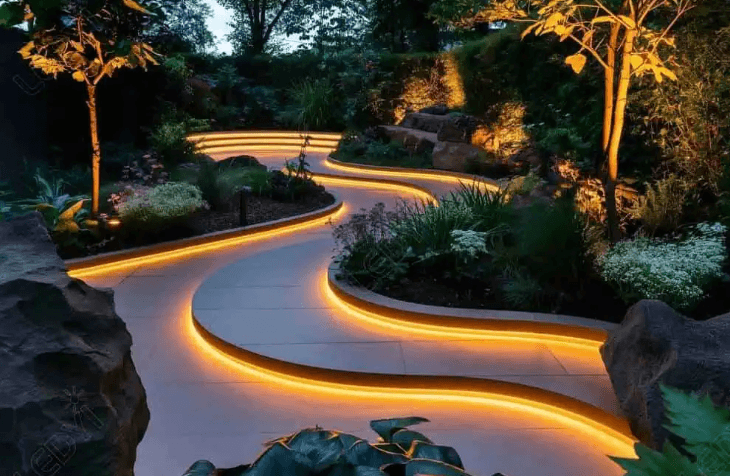
Outdoor and decorative applications can include canopies, windows, archways, pathways, contour marking, exhibitions, and holiday displays. RGB and RGBW products provide additional control over color and atmosphere. Some RGBW products combine RGB colors with warm white, allowing users to create both decorative colors and more conventional white illumination.
Controllers can also influence the final setup. An RGB touch controller, for example, may support multiple color modes, PWM dimming, and remote operation. Compatibility between the controller, strip voltage, and total load should be checked before installation.
Common Mistakes to Avoid
One common mistake is selecting a power supply without calculating the strip’s total power requirement. Another is ignoring voltage drop on longer runs. Installing a strip with an unsuitable IP rating can also create problems when the location is exposed to moisture.
Cutting the strip at the wrong point can damage the circuit. Incorrect polarity can also prevent the strip from operating correctly. Installers should check positive and negative connections, confirm the voltage, and inspect the installation surface before applying adhesive-backed products.
Heat should also be considered. LED strips need appropriate installation conditions, particularly when used at higher power levels or in enclosed spaces.
A Simple Checklist Before Installation
Before starting an LED strip project, confirm the following:
• Check the strip’s voltage and power rating.
• Calculate the total wattage based on the required length.
• Select a compatible power supply.
• Check the environmental conditions and required IP rating.
• Plan cutting and connection points.
• Consider voltage drop on longer installations.
• Confirm controller compatibility when using RGB or RGBW strips.
• Test the lighting system before completing the permanent installation.
See also: Gut Peptides in 2026: What to Check Before You Hand Over Your Card
Conclusion
Choosing LED strip lighting becomes easier when the decision starts with the installation requirements. LED type, voltage, length, brightness, power consumption, waterproof protection, and control options all influence how well the system will perform.
A suitable combination of strip and electrical components can provide consistent illumination while making installation and maintenance more manageable. Whether the project involves indoor accent lighting, signage, architectural details, or outdoor applications, checking the technical specifications first provides a more reliable starting point.
Shenzhen Dekingled Co., Ltd. was established in 2014 and operates from SanMing Industrial Park in Shenzhen, China.
The company lists fast delivery, cost-effective solutions, top quality, and technical support among its service advantages.